How to Choose the Right LLM for Your Application: A 6-Step Framework
A practical 6-step framework for selecting the best large language model for your application based on performance, cost, latency, and business requirements.
Explore large language model architectures, fine-tuning strategies, prompt engineering, and how LLMs power modern AI applications.
9 of 61 articles
A practical 6-step framework for selecting the best large language model for your application based on performance, cost, latency, and business requirements.
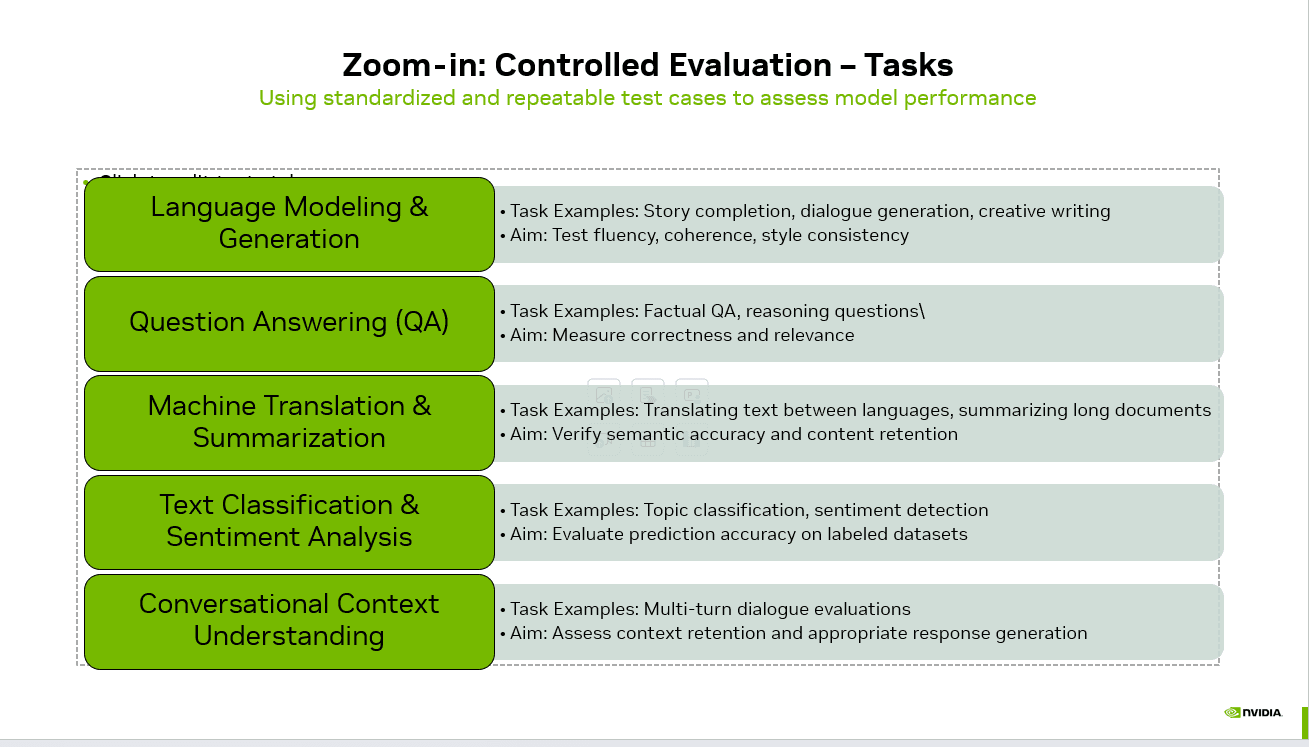
Learn the three critical LLM evaluation methods — controlled, human-centered, and field evaluation — that separate production-ready AI systems from demos.
How combining knowledge graphs with LLMs enables structured reasoning that overcomes hallucination, improves factual accuracy, and unlocks complex multi-hop question answering.
Explore how small language models (1-7B parameters) are closing the gap with frontier models for production use cases — from Phi-4 to Gemma 2 and Mistral Small.
The RAG vs fine-tuning debate continues to evolve. A clear framework for deciding when to use retrieval-augmented generation, when to fine-tune, and when to combine both.
Move beyond simple accuracy metrics for LLM evaluation. Learn to measure usefulness, safety, cost-efficiency, latency, and user satisfaction — the metrics that predict production success.
A technical deep dive into how modern LLM tokenizers work, the tradeoffs between BPE and SentencePiece, and emerging approaches that improve multilingual and code performance.
How teams are using large language models to generate high-quality synthetic training data, covering self-instruct, evol-instruct, persona-driven generation, and quality filtering.